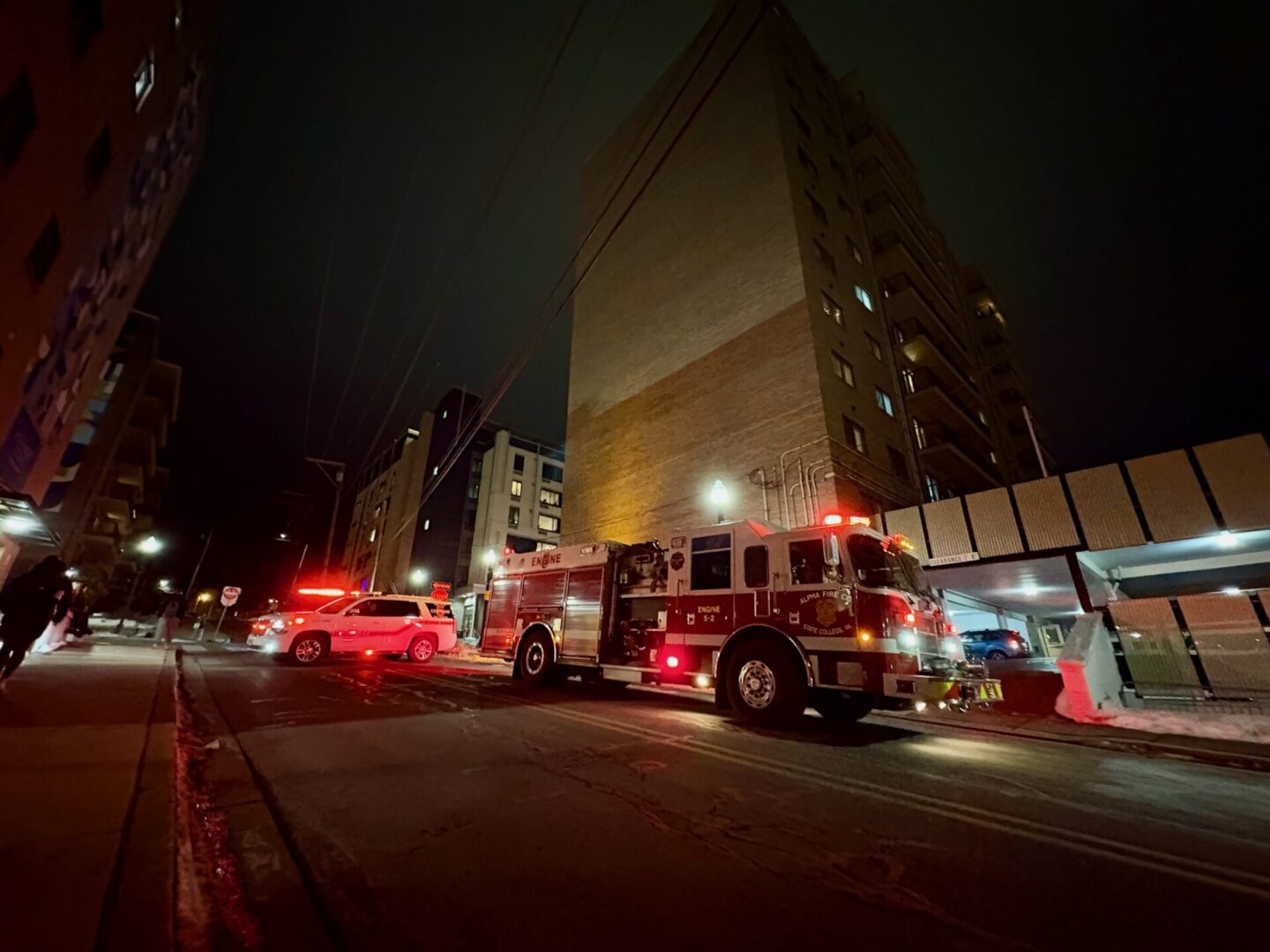
Alpha Fire Company responded on Tuesday night to a carbon monoxide leak and water damage from a burst pipe in separate incidents at downtown State College apartment buildings.
Alpha Fire Company Chief Brian Bittner said crews were called to Penn Towers, 255 E. Beaver Ave., at 6:51 p.m. when a carbon monoxide detector activated in the building’s basement boiler room, minutes after being dispatched to The Maxxen, 131 Hiester Street, for an automatic fire alarm with water flow.
No residents were displaced overnight in either building, Bittner said.
A member of the maintenance staff at Penn Towers alerted Alpha to the carbon monoxide alarm and an odor of natural gas caused by a misfiring furnace. Crews isolated and terminated gas and power to the unit and began ventilating the area, according to Alpha.
“We detected high levels of carbon monoxide [in the basement], and proceeded to go ahead and start taking actions to mitigate the situation and further evaluate the rest of the building for any other detectable levels,” Bittner said.
Minor carbon monoxide levels were detected on multiple other floors of the building and crews used fans to “move fresh air throughout the building to go ahead and allow people back in,” Bittner said.
About 20 people were temporarily displaced from their apartments but were allowed to return on Tuesday night.
“Nobody’s going to be displaced overnight,” Bittner said. “We’re putting people back in right now.”
“They’re going to have to fix the furnace,” he added. “They’re working on how they can go ahead to continue to put heat into the building as well. So thank goodness it’s mild tonight. In the building, it will stay relatively warm for the most part, but the company now is working on any kind of repairs they can do and go from there.”
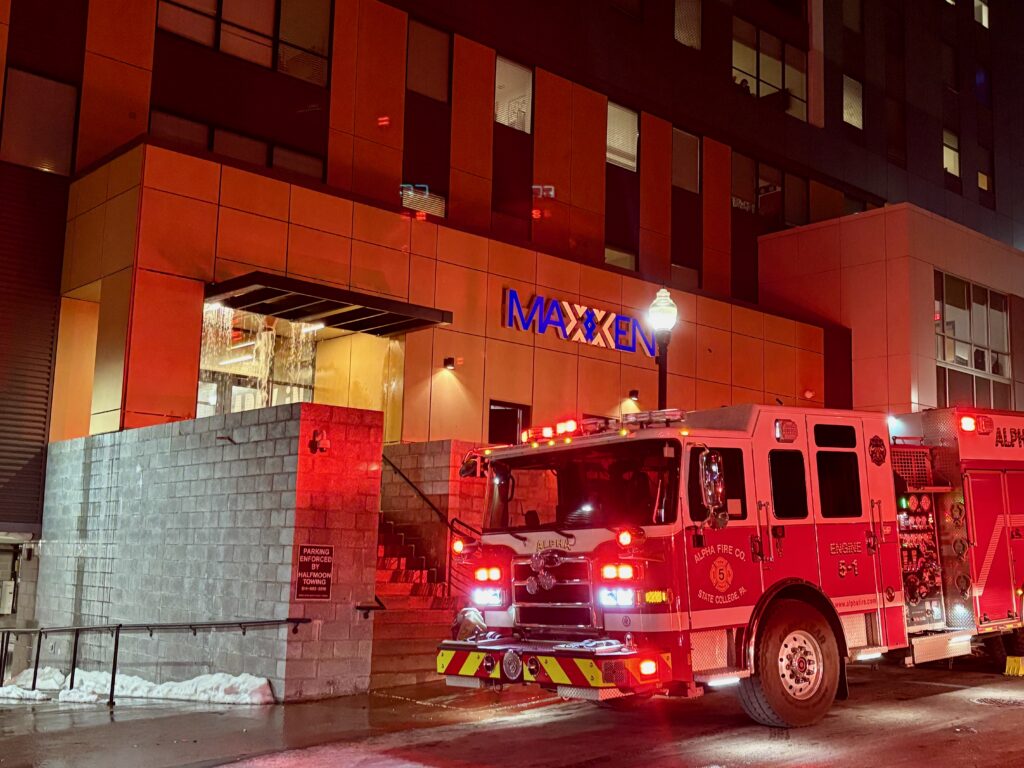
In a separate incident, crews responded to water damage at The Maxxen caused by a burst pipe amid fluctuating temperatures.
“[The Maxxen] will have to do a repair. That’s going to happen as the weather warms up, with so much cold to be had. As it warms up, we’re going to have that all over town. You’re going to have it everywhere,” Bittner told StateCollege.com. “So people are going to find places where pipes were not kept warm or unprotected, and stuff’s going to start cracking everywhere. They were working on a water line underneath the road [on Beaver Avenue] that broke up there. So as the weather changes and gets warmer, they’re going to be going all over the place.”
According to Bittner, The Maxxen will have some water damage at its entrance, mostly at the entryway, but it did not appear to significantly affect any personal property from what other Alpha personnel observed.
As of 9:30 p.m. Tuesday night, water was still down-pouring at the entrance of the Maxxen, but had slowed down significantly.
“It’s going to be busy for us with all these water lines breaking. It’s the time of the year for carbon monoxide,” Bittner shared, noting that fluctuating temperatures and increased heating use often lead to both pipe failures and dangerous gas buildup.
“Everybody needs to go ahead and make sure they have fresh batteries in smoke detectors, fresh batteries in carbon monoxide detectors, and just be aware of things like this,” he said. “It was a good catch by maintenance, the detector worked in their boiler room, and that gentleman knew what he was looking for. It all worked out tonight.”
He emphasized that simple precautions, like heating system maintenance, generator safety and ensuring clean chimneys and good wood for wood burners, can prevent serious emergencies during the colder months and as temperatures begin to rise.
Bittner explained that carbon monoxide incidents tend to increase when fuel consumption rises and heating systems are working harder, noting that these consistent check-ins can help overcome potential, serious danger.
“As this stuff happens when you’re burning more fuel, carbon monoxide comes from carbon-based fuels and… as that happens, you’re going to go ahead and things malfunction, things break, things burn inefficiently,” he said. “So it’s things going inefficiently that produces carbon monoxide, and that’s why we have these detectors… The detectors do a good job. So keep them in good working order, and it’ll save your life.”